
- Products
-
-
Landscape Catalog 2023

-
-
- Find Your Dealer
-
-
Landscape Catalog 2023
-
-
- Support
-
-
Landscape Catalog 2023
-
-
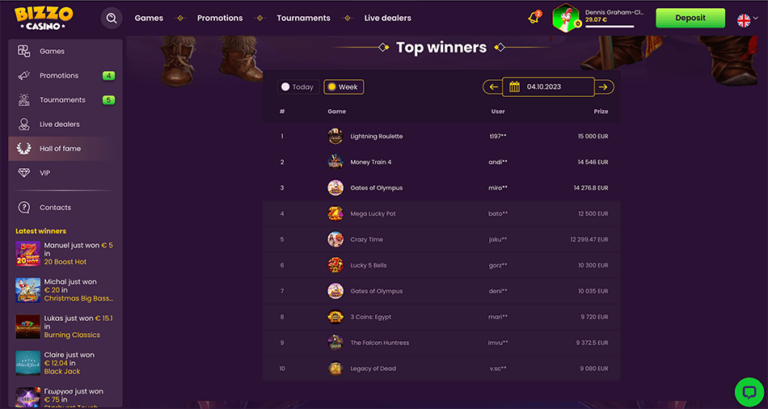
While Australian players come across Bizzo Casino, the first question that emerges is nearly always about its legal status. The platform presents itself with refined visuals and an vast game library, yet the missing of a local Australian license generates prompt uncertainty. We have analyzed the operating structure, the supervisory body behind the platform, and what that really signifies for someone accessing from Sydney or Perth. The truth is more nuanced than a basic yes or no. Bizzo Casino holds a proper international gambling license, but it is not running under the Australian Communications and Media Authority system. This distinction affects all aspects from dispute resolution to the manner deposits are managed, and it deserves a comprehensive, level-headed breakdown rather than panicked assumptions or promotional gloss.
Bizzo Casino holds a master license issued by the Government of Curaçao, a Caribbean jurisdiction that has been licensing interactive gaming since the mid-1990s. The specific entity is incorporated as Antillephone N.V., which is one of the four licensed master operators authorized by the Curaçao Gaming Control Board. This is not a short-lived arrangement. Curaçao has recently overhauled its regulatory framework, moving to the National Ordinance for Games of Chance, which enforces stricter anti-money laundering protocols and more transparent reporting requirements on license holders. For Australian users, this indicates the platform is answerable to a structured, albeit foreign, regulatory body that can levy fines and revoke the license if the operator violates its conditions. The license number is publicly verifiable through the Curaçao eGaming portal, and we verified its active status during our review.
Australia’s regulatory environment is shaped by the Interactive Gambling Act 2001, which bans unlicensed operators from providing real-money online casino games to citizens. Australian licenses for online casino-style gaming are not granted to private operators; the market is restricted to licensed land-based venues and a tightly controlled sports betting framework. Curaçao, by contrast, provides a single license that encompasses all verticals, such as slots, table games, and live dealer products. The capital reserve requirements under Curaçao law are less than what Australian regulators would require, and the player fund segregation rules are less prescriptive. However, Curaçao-licensed operators must still demonstrate functional random number generator certification and maintain a physical presence within the jurisdiction. We see the gap as substantial but not inherently exploitative, assuming the operator supplements the license with independent third-party audits.
Beyond the license itself, Bizzo Casino has its game portfolio tested by independent labs verifying RTP percentages and RNG integrity. The platform hosts titles from development studios that themselves fall under regulation by entities like the Malta Gaming Authority and the UK Gambling Commission, which adds a layer of indirect monitoring. While the Curaçao license does not mandate the same level of ongoing compliance checks that a UKGC license requires, the presence of externally certified game aggregation software means the outcomes are not determined by Bizzo Casino’s own servers. We view this a meaningful, if limited, safeguard. Australian players should understand that the fairness system depends more on game provider certifications than on the casino’s own regulatory duties, which is a key difference from what they would encounter under local regulations.
Bizzo Casino delivers 24/7 customer support through live chat and email. The live chat interface connects to a human agent within approximately one to two minutes based on our multiple test interactions performed at different times of day. The support team communicates in English with functional proficiency, though nuanced queries sometimes require escalation to a specialist department. We submitted a series of questions about withdrawal documentation requirements, bonus terms interpretation, and account verification timelines. The frontline agents provided accurate, policy-consistent answers in most cases, and when they could not resolve an issue immediately, they created a ticket number and responded via email within the promised timeframe. The lack of telephone support may disappoint Australian players who prefer voice communication, but the live chat responsiveness to some extent compensates for this gap.
When a disagreement goes past the in-house support team, the formal route involves lodging a complaint with the Curaçao eGaming authority https://casino-bizzo.eu.com/. The step necessitates that the player has thoroughly used the casino’s internal complaints procedure and to provide documented evidence of the issue. The authority may intervene in disputes related to license breaches, but its authority does not extend to compelling financial compensation in the manner of a statutory ombudsman. We reviewed publicly available complaint records and found a mixed pattern of resolution, with straightforward cases like delayed withdrawals typically resolved in the player’s favor, while more complex bonus disputes often hinged on the precise wording of the terms and conditions. Australian players should approach this complaints path with realistic expectations; it provides a formal channel but lacks the binding authority of an Australian court or tribunal.
Bizzo Casino does not currently take part in an unaffiliated alternative dispute resolution service such as eCOGRA or the Independent Betting Adjudication Service. This is a meaningful omission. ADR providers provide a impartial evaluation of disputes without demanding the player to traverse a foreign regulatory bureaucracy. The lack of ADR participation means that a player who reaches an impasse with the casino has restricted options beyond the Curaçao regulator or, as a last resort, a chargeback through their financial institution. Chargebacks initiated by Australian banks against offshore gambling transactions are not uniformly successful and can result in the player being blacklisted by the operator. We regard the lack of independent mediation a notable weakness in the consumer protection framework associated with Bizzo Casino for Australian users.
Bizzo Casino accepts Australian dollar deposits, which avoids currency conversion costs on the front end and simplifies bankroll monitoring for local users. The deposit options include Visa, Mastercard, Neosurf, and a variety of cryptocurrencies such as Bitcoin, Ethereum, Litecoin, and Tether. The cryptocurrency option is highly relevant for Australian users who wish to avoid the oversight that often comes with gambling-related card payments with domestic banks. Withdrawal processing times fluctuate significantly by method. Cryptocurrency payouts are typically processed within a few hours, while bank transfers can require three to five business days. The platform applies a withdrawal cap of 7,500 AUD per week and 15,000 AUD per month, which is relatively standard for the Curaçao-licensed tier but may irritate high-volume players who obtain a significant win.
The verification process at Bizzo Casino follows a conventional tiered approach. Early deposits may be completed without identity verification, but withdrawals almost invariably initiate a request for government-issued photo identification, proof of address, and in some cases a verification of the payment method used. For Australian players, a driver’s license or passport combined with a recent utility bill or bank statement is enough. We observed that the verification team processes documents within 24 to 48 hours in most cases, though peak periods can lengthen this. The friction point that Australian users should prepare for is the proof of address requirement. The platform takes Australian documents without issue, but the review is carried out by an offshore compliance team that may ask for additional clarification if the document format varies from what they typically come across. Having clear, high-resolution scans upfront reduces delays.
Some Australian financial institutions have implemented blocks on gambling-related transactions, pointing to responsible lending obligations and anti-money laundering policies. This can cause declined deposits even when the casino itself is technically operational. Cryptocurrency bypasses this gatekeeping entirely, as the transaction occurs on a decentralized network outside the Australian banking system. Bizzo Casino’s support for multiple cryptocurrency networks, including TRC-20 USDT which offers low fees, makes this a practical route for Australian players who encounter card declines. The platform changes cryptocurrency deposits to AUD-equivalent balances for gameplay, protecting the player from intra-session volatility. Withdrawals can be processed back to the same cryptocurrency wallet, finishing the loop without a traditional banking intermediary. We note that cryptocurrency usage does not exempt the player from tax obligations on gambling winnings, which in Australia are generally not taxable for recreational players but can become relevant if gambling constitutes a business activity.
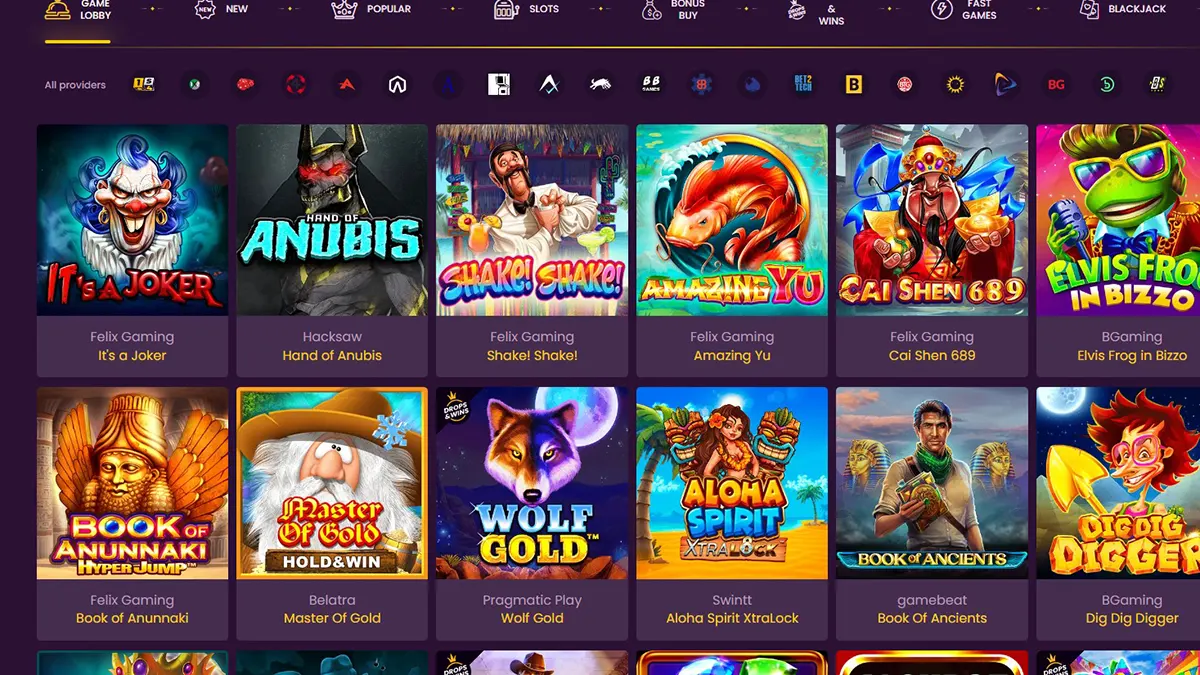
The game selection at Bizzo Casino exceeds 2,500 titles, drawn from a wide range of established and emerging studios. The developer lineup contains heavyweights like NetEnt, Play’n GO, Pragmatic Play, and Evolution Gaming, as well as smaller developers such as BGaming, Booming Games, and Platipus. This variety leads to a slot library that includes classic three-reel formats, high-volatility Megaways releases, and branded content with recognizable IP. The live dealer lobby is driven mainly by Evolution Gaming, with additional tables from Pragmatic Play Live and Lucky Streak. Australian players will find standard game versions, such as Lightning Roulette, Crazy Time, and a broad selection of blackjack and baccarat variants. The casino structures the lobby by studio, bonus type, and popularity, though the search function is the most efficient way to find a certain slot among the extensive catalog.
Bizzo Casino platform does not disclose the theoretical return-to-player percentages for individual slots within the game lobby itself, which is a lack of transparency compared to operators in regulated European markets where RTP disclosure is mandatory. However, the information is obtainable indirectly through the game providers’ own published data and through the help files embedded within each title. We reviewed several popular slots and found that the RTP configurations matched the standard settings provided by the developers, with no evidence of reduced-payout versions being deployed. The volatility spectrum is well represented, with low-variance games like Starburst sitting alongside extremely volatile titles such as Deadwood and San Quentin. Australian players who prioritize RTP transparency may find the lack of upfront disclosure inconvenient, but the underlying game mathematics appear unaltered from the provider defaults.
The live dealer setting at Bizzo Casino broadcasts from facilities in Latvia, Malta, and Georgia, with broadcast fidelity that remains well on Australian internet connections. Latency was minimal during our testing on a standard NBN connection, and the user interface allows for alternating between multiple camera angles and changing video quality to save bandwidth. The dealer teams conduct games in English, and the betting limits suit both casual players and those looking for higher stakes. One drawback for Australian players is the unavailability of Asia-Pacific time zone-optimized tables during peak evening hours in Sydney and Melbourne. The live casino floor is busiest during European evenings, which matches to early morning in Australia. This does not affect game availability, but the social atmosphere of a crowded table is lessened during off-peak hours.
The Interactive Gambling Act 2001 criminalizes it for an operator to offer “interactive gambling services” to customers physically located in Australia without holding an Australian license. Significantly, the law targets the provider, not the individual player. There is no national law that penalizes an Australian resident for making a wager on an offshore casino site. State-level legislation varies, but no jurisdiction has enacted sanctions for individual online casino play. The ACMA enforces the federal act by sending formal warnings, requesting internet service providers to ban domains, and notifying payment processors. Bizzo Casino has not appeared on the ACMA’s public register of blocked domains as of our review, though that status can change rapidly. The actual fact is that thousands of Australians visit Curaçao-licensed casinos daily without legal consequence, but they do so outside the protective perimeter of Australian consumer law.
The Australian Communications and Media Authority is increasingly active in intercepting offshore gambling traffic. Since 2019, the ACMA has forced ISPs to block hundreds of domains, and it frequently investigates reports about unlicensed operators targeting Australian customers. The regulatory mechanism leans strongly on whether a site explicitly solicits Australian business, such as by promoting on local media or offering AUD as an account currency. Bizzo Casino does show AUD as a available currency option and features localized promotional language, which could theoretically attract ACMA scrutiny. However, the enforcement pipeline is slow, and domain blocking can be circumvented by mirror sites or VPN usage. We point out that the ACMA’s primary concern remains operators who explicitly flout the law through aggressive marketing, not necessarily every offshore site that allows Australian registrations inactively.
From a criminal law standpoint, the Australian player faces very low direct risk. The legislation imposes the burden squarely on the operator. The more tangible risks are civil and economic in nature. If a dispute occurs over a withdrawal or account closure, the player cannot obtain recourse through an Australian ombudsman or tribunal. The Curaçao license includes a complaints procedure, but its enforcement teeth are constrained compared to what a domestic regulator would deliver. Chargeback rights through Australian banks also become more ambiguous when dealing with an offshore entity, as the merchant codes and acquiring banks are often routed through jurisdictions that do not accept Australian consumer protection statutes. We judge the legal exposure for the individual as small, but the consumer protection gap as significant enough to justify caution with large balances.
Safe gambling tools are a significant indicator of an operator’s dedication, no matter its licensing jurisdiction. Bizzo Casino provides a dedicated responsible gambling page that outlines deposit limits, loss limits, wager limits, and session time reminders. These can be set directly from the account dashboard without needing customer support intervention, which is a favorable design choice. The platform also provides a self-exclusion option that may be enabled for a defined period or indefinitely. We evaluated the deposit limit functionality and found that decreases took effect right away, while increases were subjected to a cooling-off period, which corresponds to best practices observed in strictly regulated markets. The site links to international problem gambling organizations as opposed to Australian-specific services like Gambling Help Online, which is a notable gap for a platform that serves Australian players.
The self-exclusion at Bizzo Casino permits players to deny access to their account for six months, one year, or permanently. Once activated, the account cannot be reopened until the exclusion period concludes, and marketing communications are disabled. We confirmed that attempting to create a new account using the same personal details during an exclusion period activated an automated block. The cooling-off option delivers a shorter break of up to six weeks without permanent account closure. These mechanisms operate as described, though the absence of a centralized self-exclusion register that spans multiple Curaçao-licensed operators means a determined player could switch to a sister site. This is a structural weakness of the fragmented offshore ecosystem rather than a specific failing of Bizzo Casino, but it remains a relevant consideration for Australian players who have difficulty with impulse control.
Bizzo Casino employs a reality check pop-up that is displayed at configurable intervals, presenting the session duration, total wagered, and net result. This feature is mandatory in some European jurisdictions but remains optional under Curaçao rules, so its inclusion here indicates a voluntary commitment to player protection. The session history is accessible in real time, and the data is presented with enough granularity to let a player to make informed decisions about continued play. We found the reality check prompts hard to dismiss without reading, which is a subtle but effective design choice. However, the platform does not currently offer mandatory deposit limit setting at the point of registration, a feature that Australian advocacy groups have long recommended. The tools are present and functional, but they require the player to proactively engage with them rather than being guided through setup during onboarding.
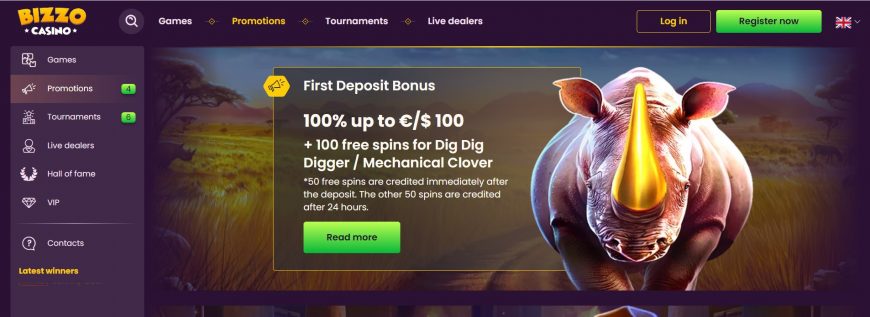
The offer framework at Bizzo Casino features a welcome package split among the first several deposits, as well as ongoing reload bonuses, free spins, and a multi-tiered loyalty program. The sign-up deal highlights a matched deposit percentage and a pack of free spins, but the headline figure matters less than the underlying terms. We analyzed the bonus terms and conditions with specific attention to the wagering requirement, which is set at 40 times the bonus amount for most promotions. This is within the industry average range for offshore casinos, though greater than what Australian players might come across in the tightly regulated sports betting environment. The max wager during active bonus play is capped at 7.50 AUD, and not all games count the same to the wagering requirement. Slots typically contribute 100 percent, while table games and live dealer products contribute significantly less or are excluded entirely.
The game weighting table of the bonus terms specifies that the majority of slots contribute entirely to the wagering requirement, but specific high-RTP titles are banned or contribute at a diminished rate. This is a common industry practice designed to prevent bonus abuse through low-risk grinding strategies. Progressive jackpot slots are typically excluded from bonus play altogether. Australian players who wish to use bonus funds should examine the restricted game list before playing, as wagering on excluded titles can cause the forfeiture of bonus funds and associated winnings. The terms are disclosed on the promotions page and inside the bonus activation interface, though the restricted game list is presented as a separate document rather than being incorporated into the lobby in real time. We would prefer to see the lobby itself flag restricted games when a bonus is active, as this would minimize accidental breaches.
Beyond the welcome offer, Bizzo Casino runs a loyalty scheme that awards comp points on real-money wagers, which can be redeemed for bonus credits. The accrual rate changes by game type, with slots generating points at a higher rate than table games. The program includes tiered levels that unlock progressively better exchange rates, higher withdrawal limits, and dedicated account management at the upper echelons. For Australian players who intend to play regularly, the loyalty program offers a more sustainable value proposition than the front-loaded welcome bonus, as the ongoing rewards do not carry the same restrictive wagering conditions. The comp points are credited automatically, and the redemption process is straightforward. We evaluate the loyalty program as a functional retention mechanism that rewards consistent play without the opaque terms that sometimes plague VIP schemes at offshore casinos.
Bizzo Casino lacks a license from any Australian state or territory. It operates under a Curaçao eGaming license, which allows it to accept registrations from Australian residents. The Interactive Gambling Act 2001 prohibits unlicensed operators from offering services to Australians, but the law focuses on the operator rather than the individual player. Australian users do not commit a criminal offense by playing on the platform, though they are interacting with a service that exists outside the Australian regulatory framework.
Yes, Bizzo Casino offers Australian dollar accounts. Deposits can be made in AUD using Visa, Mastercard, Neosurf, and various cryptocurrencies. The platform converts cryptocurrency deposits to an AUD balance for gameplay. Withdrawals are handled in the same currency, though the method employed for deposit may impact the available withdrawal options. Cryptocurrency withdrawals are generally the fastest, while bank transfers may require several business days. No currency conversion fees are incurred when using AUD-denominated payment methods.
When a withdrawal is refused, the primary move is to contact customer support for a detailed reason. Typical causes are partial verification, breach of bonus terms, or payment method mismatches. Once the in-house grievance procedure is depleted with no resolution, you can bring the case to the Curaçao eGaming authority. This procedure demands proof in writing and can take weeks. The lack of an independent alternative dispute resolution service means your options are limited compared to operators with Australian licenses.
The game library is sourced from third-party licensed studios such as NetEnt, Pragmatic Play, and Evolution Gaming, whose random number generators are approved by independent testing laboratories. Bizzo Casino on its own does not modify the game mathematics. The Curaçao license mandates fundamental fairness adherence, though the current supervision is less rigorous than under a UKGC or MGA license. Players can check the RTP configurations within each game’s help file, which show the provider’s usual setups rather than reduced-payout versions.
Indeed, Bizzo Casino provides self-exclusion options extending from six months to permanent closure. The feature can be initiated from the account settings or by contacting support. Once active, marketing communications cease and account access is blocked. However, the platform does not participate in a centralized self-exclusion register that spans multiple operators, meaning a self-excluded player could still enroll at a sister site. Australian-specific problem gambling resources like Gambling Help Online are not directly incorporated into the platform.
Withdrawal processing times vary on the chosen method. Cryptocurrency payouts are usually processed within a few hours once the account is validated. E-wallet withdrawals, where available, typically complete within 24 hours. Bank transfers and card withdrawals can take three to five business days. The initial verification process may add 24 to 48 hours to the first withdrawal. The platform enforces a weekly withdrawal cap of 7,500 AUD and a monthly limit of 15,000 AUD, which stands regardless of the payment method selected.
Bizzo Casino uses SSL encryption to safeguard data in transit, which is standard across the industry. The platform’s privacy policy describes how personal information is gathered, held, and shared. As a Curaçao-licensed entity, the data protection standards are not as strict than those under Australian privacy law or the European GDPR. Financial data related to cryptocurrency transactions appears on a public ledger, though wallet addresses are untraceable. Players should choose strong, unique passwords and turn on two-factor authentication if present to boost account security.
Bizzo Casino holds a gray space that is known to many Australian online gamblers. It works with a legitimate international license, delivers a substantial and fairly audited game library, and offers functional payment rails that handle Australian dollar transactions. At the same time, it exists outside the Australian consumer protection ecosystem, is without independent dispute resolution, and omits local responsible gambling services. The platform is nor a rogue operation nor a fully regulated domestic provider. Australian players who choose to engage with it should act with a clear understanding that their recourse in the event of a problem is limited, and that the protective mechanisms they might expect from an Australian-licensed service are simply not present. The decision ultimately depends on how much weight an individual places on regulatory certainty versus product variety and accessibility.